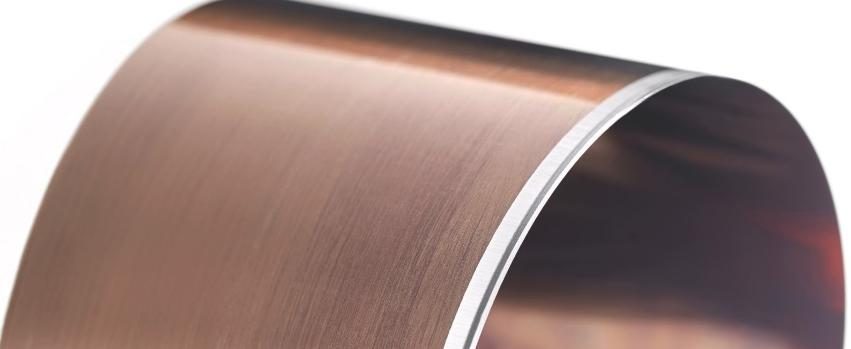


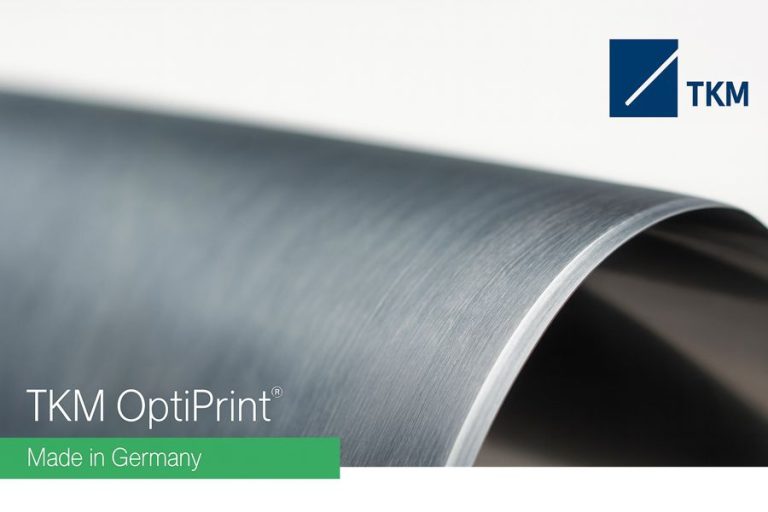
Dimensions according to the manufacturer’s data sheets: A = blade width; B = blade thickness.
- TKM MeyerPrint® (carbon steel): the most widely used blade in the range. High-quality carbon steel with a high chromium content and a very low sulphur content. For short and medium runs, in gravure and flexographic printing. ESP polishing. A: 10–80 mm; B: 0.07–0.5 mm.
- TKM PolyPrint® (polymer): made of polyester, and of other materials on request. Mainly for water-based inks and coating, and as a containment (chamber-sealing) blade in flexographic printing. Being non-metallic, it prevents cuts to operators, scoring on cylinders and metal particles in the ink. Wedge or straight edge, and customer-specific geometries. A: 10–120 mm; B: 0.19–0.5 mm.
- TKM OptiPrint® (carbon steel): premium carbon steel with a high chromium content. Its fine microstructure wears down as powder, which keeps steel particles out of the chamber and the ink. Gentle on cylinders. Gravure and flexographic printing. ESP polishing. A: 10–80 mm; B: 0.15–0.3 mm.
- TKM NiroPrint® (stainless steel): corrosion-resistant, including in the contact zone. For water-based inks and varnishes, abrasive or aggressive systems and extreme pH values. Flexographic printing, offset coating units and decorative gravure. A: 10–70 mm; B: 0.1–0.5 mm.
- TKM PowerPrint® (tool steel): high-alloy steel produced exclusively for TKM. For high printing speeds, and gentle on chrome cylinders and anilox rolls. Gravure and flexographic printing. ESP polishing. A: 10–80 mm; B: 0.15–0.3 mm.
- TKM CeraPrint® (ceramic coating): coated with ceramic particles, with a very precise coating thickness. Designed for gradients, halftones and demanding print jobs, in medium and long runs and with any ink system. Gravure and flexographic printing. A: 10–60 mm; B: 0.15–0.3 mm.
- TKM Ultra X® (coated): gravure doctor blade with a state-of-the-art coating. According to TKM, it needs no run-in time and prevents streaking and toning, even at high speeds. Lamella edge. A: 35–60 mm; B: 0.15–0.20 mm.
- TKM DuroBlade® (coated): patented coating for ink, varnish and coating systems in flexographic printing, including abrasive ones. For water-based inks, TKM recommends DuroBlade with a NiroPrint (stainless steel) core. A: 10–80 mm; B: 0.152–0.305 mm.
- TKM DuroBlade® HL: version for low-volume, high-screen-count anilox rolls and for fully engraved chrome cylinders. Suitable for high-definition flexo (HD Flexo). A: 10–80 mm; B: 0.2–0.305 mm.
- TKM ScreenPrint® (rotary screen printing): internal doctor blade for rotary screen printing (decorative, wallpaper, security, textile and label printing). Corrosion- and solvent-resistant, with a rubber lip of 65 to 80 Shore. Supplied cut to size and ready to use. A: 20–120 mm.
NEOFLEX is an edge design patented by TKM, available in OptiPrint and PowerPrint quality. According to the manufacturer, at the same pressure it bends less and distributes stress more evenly along the blade. This lets you work with lower pressure against the anilox roll.
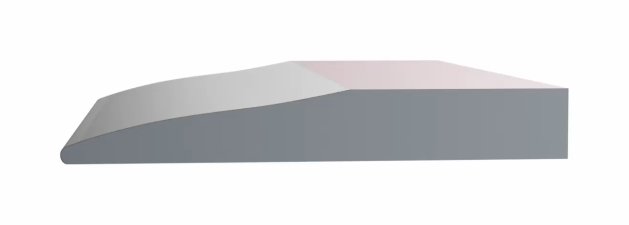
Benefits stated by TKM:
- Less wear on doctor blades, end seals and anilox rolls.
- Less scoring on the anilox roll, as particles are less likely to get trapped.
- Consistent ink transfer, without ink backflow or dot gain caused by blade pressure.
- Easy setting and reproducible results.